
Tai Chi, Chi Kung and anxiety
Can Tai Chi and Chi Kung practice help us better manage stress and anxiety?
We probably know that one of the benefits of practicing Tai Chi or Chi Kungit’s that they help us deal with stress and anxiety. But it’s important to understand that, regardless of the exercises we do or the type of movements we practice at a slow pace, better management of stress and anxiety comes from self-awareness during practice. This awareness gradually develops as we internalize the Tai Chi and Chi Kung exercises, and it naturally guides us—through our innate human intelligence—toward balance and well-being at all times and in any circumstance.
Our natural tendency to balance free us from states in which anxiety takes control of the mind, leading us to states of intense suffering. Without the need for an intermediation directed by our intellect, this awareness transform attitudes, emotions and thoughts that have previously completely colored our mental screen, becoming harmful to our health.
As it is said in ancient papers, through practice we could transform ‘poisons into honey’.

Anxiety is not the problem
Nowadays, anxiety is often talked about as if it were necessarily a disorder—and it’s not. Anxious attitudes and the emotions that trigger anxious states aren’t the problem in themselves. Problems arise when these emotions overwhelm us too often and in situations where they’re neither necessary nor useful. It wouldn’t even make much sense to talk about “excessive” levels of anxiety.
There are situations in which we release high levels of cortisol into the bloodstream, preparing us to fight or flee. This release of cortisol comes with a psychological and physical response that, at times, is necessary to help us get through challenging situations successfully.
Yin and Yang balance
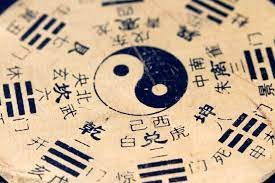
Under Yin and Yang principle, yin forces (feminine, darkness, passivity and earth) and yang forces (masculine, light, activity and heaven) tend to balance each other. The extreme of a yin force gives way to the beginning of a yang force, and vice versa. Thus, from the point of view of this principle, all phenomena occur during the development and retreat of these two forces, without any living or inert being on Earth, including humans, having full control over them.
Estas fuerzas aunque puedan parecer antagónicas son complementarias, y a través de la toma de conciencia de nuestro centro (Dan Tien) que se puede desarrollar a través de la práctica, nos vamos situando como observadores de la acción de estas fuerzas en nuestro interior. Desde esta conciencia interna se puede observar también, el efecto de las fuerzas yin y yang externas a nosotros y aprender a relacionarnos mejor con ellas.
This gradually leads us towards what is known in the Taoist tradition as the middle path or Tao, which concept is difficult to explain or describe with words, but includes us within a whole encompassing these two forces, and giving them a sense of harmony.
The meaning of intention in practice

Fortalecer nuestra intención es uno de los principales recursos internos que podemos desarrollar con los ejercicios de Tai Chi y de Chi Kung. Aprender a dirigir la intención en un sentido u otro, movilizando nuestra energía desde la conciencia a través de nuestro cuerpo, y observando repetidamente los efectos beneficiosos que tiene el movimiento interno a nivel psicoemocional y físico, nos ayuda a tonificar el ‘músculo’ de la intención. Una intención fortalecida a través de la práctica de Tai Chi y Chi Kung nos ayudan a manejar de manera adecuada los estados de estrés y ansiedad.
Esta atención a nuestro espacio interior, reconecta de manera sencilla y natural las rutas neuronales del bienestar, y nos permite desarrollar una actitud de equilibrio. La atención a las sensaciones que se producen durante los distintos tipos de movimiento: la expansión y la contracción desde el centro, la circulación del Qi and the effects that have on us, allows us to transform the practice into an experience at all levels (spiritual, psychological and physical).
It also allows us to detect our midline, the psycho-emotional state that keeps us at peace. Thanks to an intention strengthened by practice, we cultivate the attitude of returning to this state when we feel far from it.

