
Our inner space
Every day we give more importance to how livable the buildings are where we live or spend many hours, such as our homes, workplaces, or leisure spaces. It’s clear how much these environments influence our mood, health, relationships, productivity, and overall quality of life. But do we pay the same attention to our inner space? Is our inner space a livable place for us? A comfortable space where we can grow as human beings? And if it isn’t, do we know how to make it more livable?

Just as we spend time taking care of the places we live in, we also have the possibility of spending time caring for our own inner space, making it more livable, calm, healthy, and full of vitality and energy.
Feeling at ease within yourself
Feeling at ease within yourself is not the same as feeling good about yourself. When we talk about feeling good about ourselves, we’re talking about self-image. About the ideas or opinions we build about who we are, usually based on our own beliefs or those of others.
This is something totally subjective and sometimes unstable, depending on our upbringing, character, personality, emotional maturity, memories of past experiences, and so on. This perspective is more about a mental or cognitive acceptance of our current situation.
Feeling at ease within yourself has more to do with directly perceiving what’s happening inside you, before turning it into inner dialogue—sometimes even before it reaches conscious thought. It’s about feeling comfortable simply by inhabiting your own body. About sensing, through your presence in it, its inner vibration, its energy, and the comfort that comes from feeling its internal harmony.
How to take care of our inner space
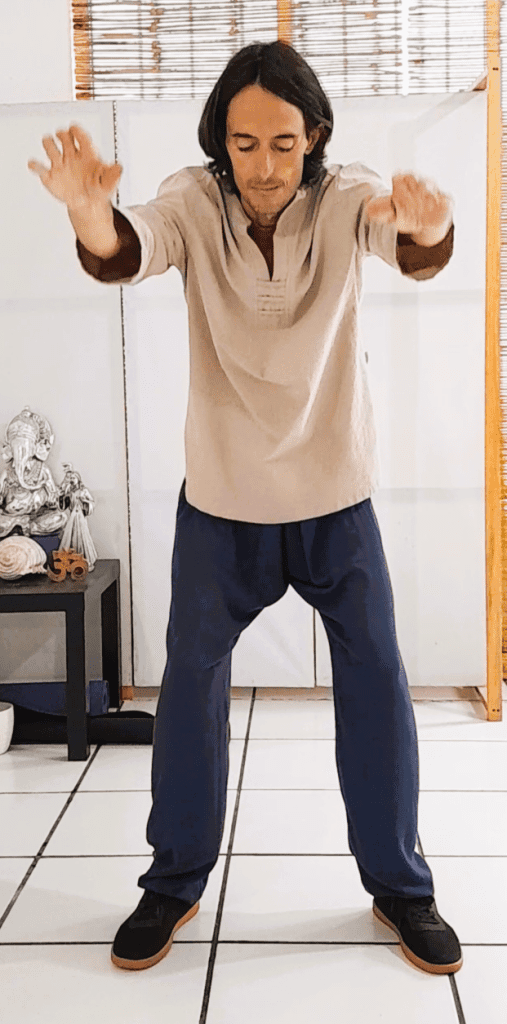
En un principio, tal vez no veamos la posibilidad de cuidar nuestro espacio interior como lo hacemos con una vivienda, una oficina o nuestro hogar. Y es que al parecer que lo que sucede en nuestro interior se escapa muchas veces de nuestra capacidad de control, de manejo o de acción. A veces creemos que lo que sentimos o vivimos en nuestro foro interno es la consecuencia directa de nuestras experiencias de vida. Creemos que no podemos hacer nada para estar mejor cuando las cosas no van como nos gustaría. Pero a través de los ejercicios de atención consciente durante la práctica de Taichi and Chi Kung, podemos llegar a percibirnos como seres conscientes, y con esta consciencia, sentir que habitamos un espacio todavía más cercano, más íntimo que nuestro propio hogar: nuestro cuerpo.
By coming into contact with this invisible space where our emotions, sensations, thoughts, and feelings live—and by staying present within ourselves—we can develop a clearer perception of this inner space. We can get to know it better and learn how to work with the movements that arise within it. This more conscious way of relating to ourselves helps us stay balanced, even when external conditions and situations are not ideal.
It is our connection with the cognitive, psychological, emotional, and behavioral aspects of ourselves that allows us to experience this inner space either as a comfortable place—where we feel at ease, calm, and confident most of the time—or, on the other hand, as a hostile, uncomfortable, agitated, insecure, or constantly unstable space.

